Registered Office Via Manzoni,
32
73020 Cursi
(LE) -
Italy
Offices and production S.S. Lecce - Maglie
usc. Melpignano Staz.
73020 Melpignano (LE) - Italy
THE MIOcENE AGE.
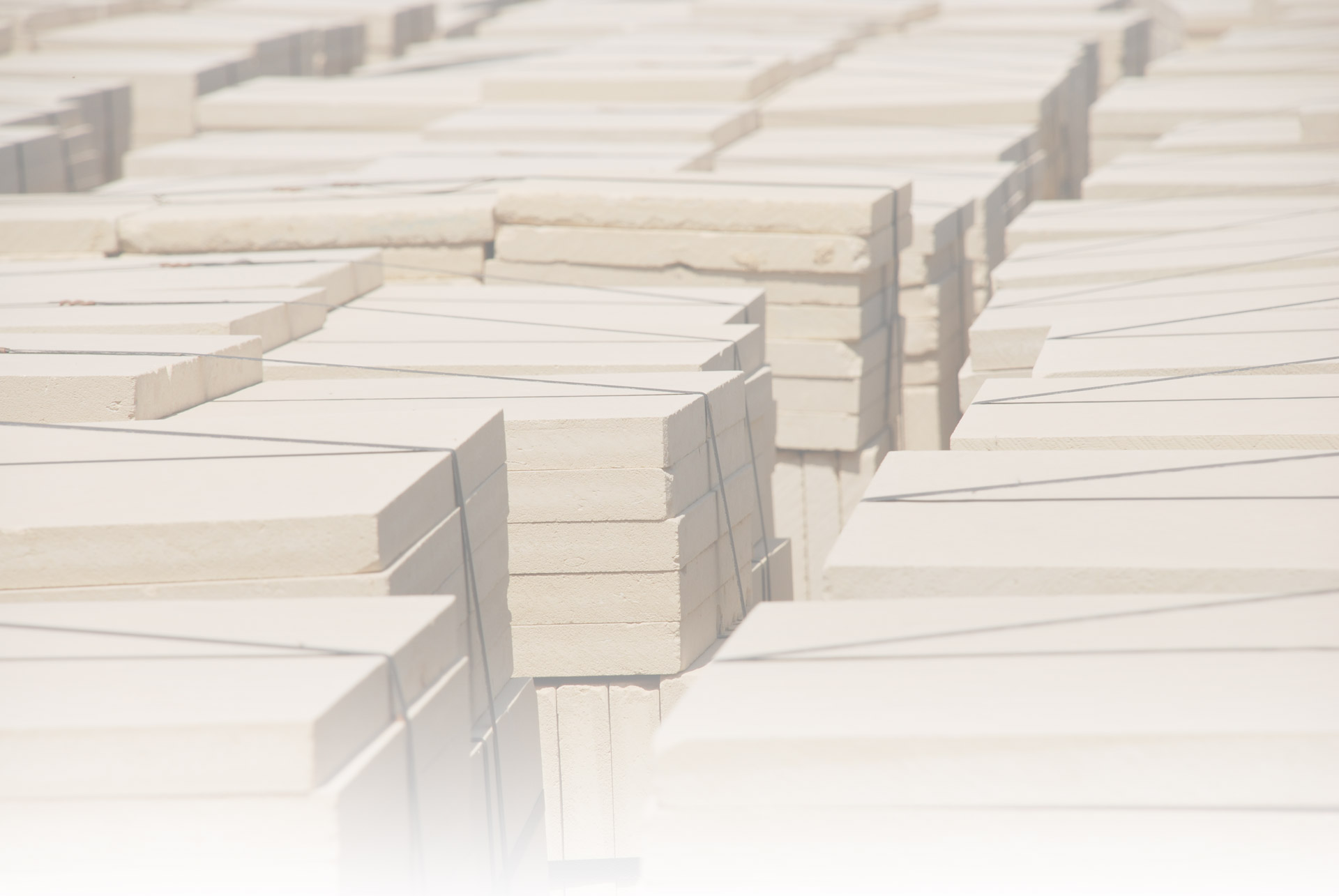
The Salentine stone has ancient origins. Scholars of the second half of the nineteenth century agreed in dating back it to Miocene, a period of the Tertiary lasted from 27 to 17 millions of years ago, even if they argued about the precise position of its different levels.
It was not so easy to go back to the historical origins of such a distant and complex structure whose characteristics depend on millions of years of history.
It is a calcareous rock belonging to the miocenic limestones family.
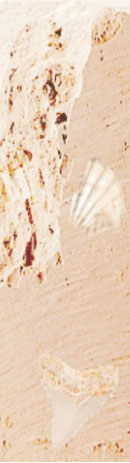
It is characterized by a great number of fossils , especially the planktonic and bentonic ones, sometimes fully preserved. They are real archeological finds revealing millions of years the stone lived. So they prove the antiquity of the Salentine stone increasing the value of its applications: monuments, villas and complements of furnishing.
To the petrological test, the Salentine stone consists of a granular mixture (microfossils, fragments of fossils, intraclasti and pellets) englobed in the calcite cement
The most important element is calcium carbonate.
A smaller quantity of granules of glauconite, quartz, feldspars, muscovite and argillaceous material enrich the substance and create different facetings to the stone, sometimes hard and resistent, sometimes soft and ductile.
As a consequence of different litofacies characterizing Miocene in Salento, there is a Variousty of stones differing in colour, granulometry,homogeneity, compactness and period.
Among these stones we can remember: "cucuzzara", "tosta", "bianca", "dolce", "gagginara" and "niura"..
The Salentine stone likes being equal to every situation, so that it has different structures for different needs.